


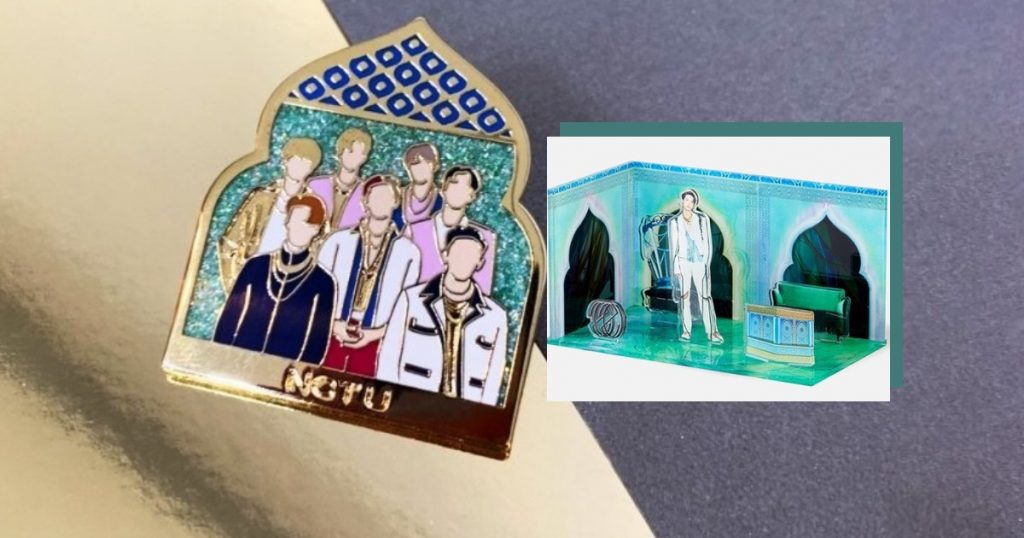
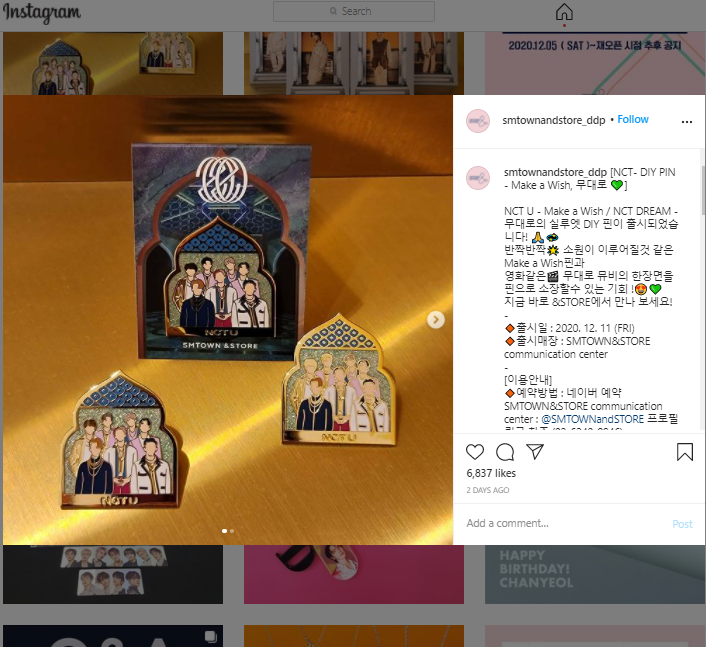
The K-pop music industry is a rigorous one. Many groups are pitted against each other at all times of the year, each one trying to make it to the top of the charts with their latest “comeback” (basically the equivalent of the artists releasing new music). With that being said, companies are constantly looking for ways to ensure that their artists stand out from the crowd. In the latest from the mammoth industry that is K-Pop, one of the country’s big three entertainment companies – SM (who introduced TVXQ!, Super Junior, Girls’ Generation, SHINee, f(x), EXO, Red Velvet) – is facing backlash from fans for the concept and art used in the comeback for the boy group, NCT. The group’s sub-unit, NCT U, has found themselves in hot water for the designs of their merchandise. The merchandise, released in conjunction with the groups single “Make A Wish (Birthday Song)” includes pins and popup displays using designs of mosques and ornate cubes that are very similar to the Kaaba.

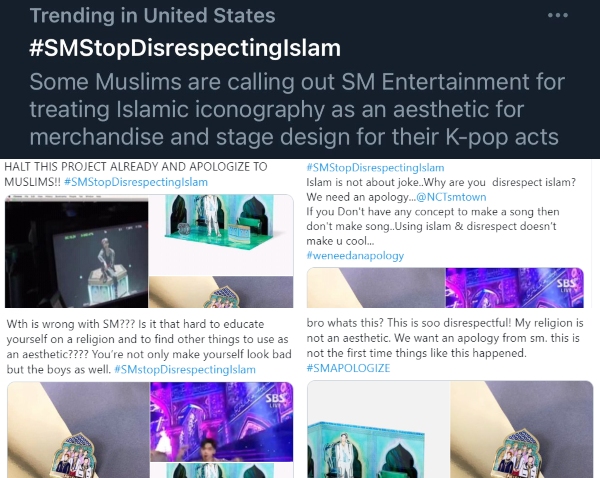
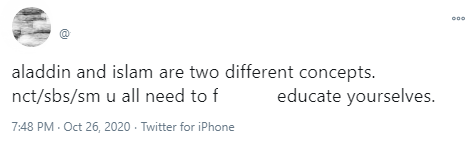
Fans are taking issue with the designs, stating that they are appropriating Islamic culture. As a result, fans have been tweeting the hashtag #SMStopDisrespectingIslam, causing it to trend on Twitter.

This isn’t the first instance of what is seen as religious appropriation by the company. NCT U has previously come under fire for using the imagery of different cultures and religions in their performances. Most recently, during a live performance on the South Korean Music show ‘Inkigayo’, NCT U danced and sang while accompanied by a backdrop made up of an Islamic shrine. Following their performance, fans pointed out that the visuals are of the Imam Husayn Shrine, which is both a mosque and the burial site of Husayn ibn Ali – the third Imam (or leader) of Shia Islam and the grandson of the Prophet Muhammad. Not only that, texts of their prayers were used in the design of the backdrop.
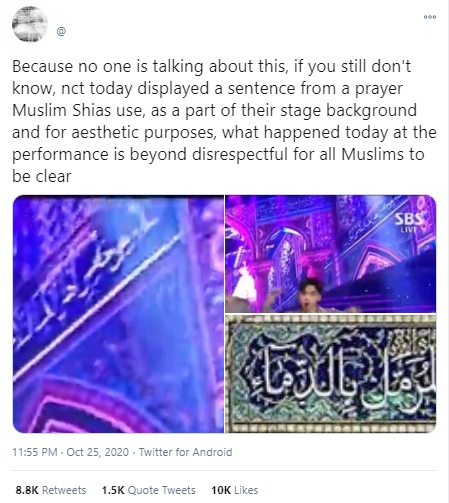

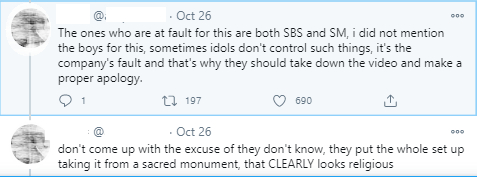
The use of religious texts as decoration on stage and as the backdrop has raised the concern and ire of fans, who have been shifting the blame for the misappropriation between the boys of the group, the company that manages them and the show’s creators. Several fans had also kickstarted email campaigns to demand that the TV network that hosts ‘Inkigayo’ -SBS – remove the offensive performance from all online platforms.
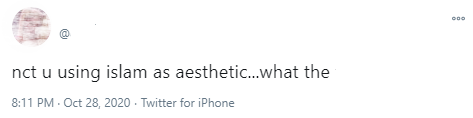


However, many were quick to point out that the boys shouldn’t be included in the backlash as fans of K-Pop are aware of the fact that artists (especially newer ones) usually have very little if not zero say in the concepts decided upon for each debut and/or comeback stage. Nevertheless, many are unhappy with the fact that the boys have appeared to be appropriating multiple different SEA cultures throughout the comeback.

Since even before the release of the music video for ‘Make A Wish (Birthday Song)’ in mid-October, fans and critics alike have been calling out the concepts and themes running through the songs campaign. The imagery in tease photos (that would alter correlate with the music video) displayed the generic use of Middle Eastern, Indian and Arabic imagery. One member of the group confirmed that inspiration was taken from ‘ Ali Baba and The Forty Thieves’.
As such, NCT U has been accused of cultural appropriation for the clothing, set design and even the dance moves used. Other live performances of the song see the members sporting turbans and using mudras (a symbolic or ritual gesture or pose) usually practised in Hinduism, Jainism and Buddhism.
NCT comprises of 23 different members while the concept, song and performances in question involve the subgroup, NCT U which comprise of members Taeyong, Doyoung, Jaehyun, Jaemin, Lucas, Xiaojun, and Shotaro. NCT U is the first sub-unit of the group as they do not have fixed members (meaning the members involved change each time). The most recent song, a dance-pop track with underlying with hip-hop beats and whistling. According to the Genius, “the Korean rendition of the song focuses on a more dreamy, magical theme and never explicitly mentions a birthday party” while “the English version emphasizes it non-stop with various different comfort foods and directly references it”. The group is managed by SM Entertainment and are currently promoting their sophomore album NCT Resonance Pt. 1. SM Entertainment has yet to address nor respond to the backlash.
Watch the performance in question here:

*Article was originally published on the 31st of October 2020.
It has since been updated to reflect present circumstances.