


*T/W: Eating disorders.
Reader discretion is advised.
In a world where social media is curated to highlight only the ‘good’, ‘flawless’ and seemingly ‘perfect’ aspects of beauty, it’s no surprise that eating disorders have been on the rise. Its correlation with the increase in social media exposure is a rather telling sign that people still believe that there is an “ideal body shape”, “ideal size”, “ideal standard of beauty”. Undoing decades of Westernisation and media ideals of size 0 models with long limbs and zero imperfections is a slow (although progressive) journey. After all, as the National Eating Disorder Association reports, up to 70 million people (both male and female) suffer from eating disorders.
View this post on Instagram
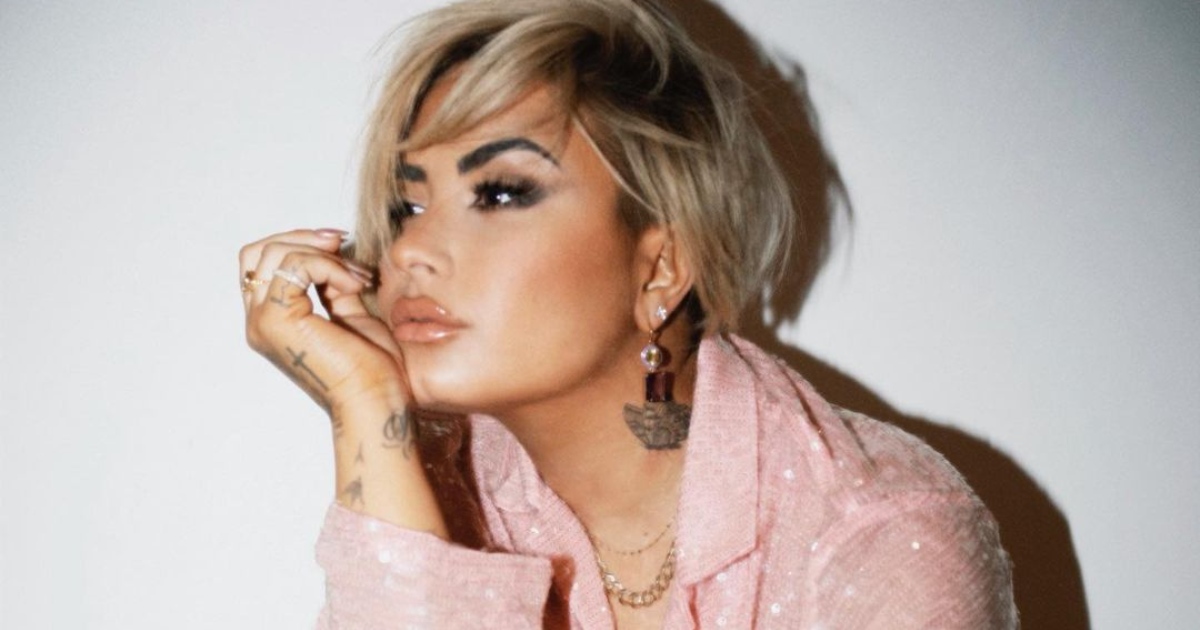
Nevertheless, the good of social media is the ability for people to use their platforms to educate those within their reach of the importance of self-care, of accepting one’s flaws. Celebrities are now more open about their struggles with disorders, illnesses and the like because they know how important it is to let people know that they aren’t alone in their fight, that there is a positive end just waiting for them on the other side: the end known as “recovery”. One such celebrity is singer Demi Lovato, who – on Christmas Eve – shared an important series of images alongside her initial belief that “recovery from an eating disorder wasn’t real” an nd how that changed –
“That everyone was faking or secretly relapsing behind closed doors. ‘Surely she throws up here and there’, ‘she can’t POSSIBLY accept her cellulite’”… those we’re just a few of the things that I used to tell myself growing up. I’m so grateful that I can honestly say for the first time in my life – my dietitian looked at me and said ‘This is what eating disorder recovery looks like.’ In honor of my gratitude for the place I’m in today, this was a lil shoot I did by myself in quarantine this summer when I wanted to celebrate my stretch marks instead of being ashamed of them.”
And to do so, she posted a series of photos of her stretch marks covered in what appears to be gold glitter, to “celebrate my body and all of its features (whether society views them as good OR bad)”.
This technique isn’t exactly new, with Malaysian artist Catherhea (@catherhea ) – an advocate for diversity – on Instagram having dedicated a whole series to the art of “kintsugi”, the Japanese way of mixing lacquer dusted or mixed with powdered gold, silver, or platinum to fix and mend broken pottery. The art is based on the idea that it in highlighting and embracing our flaws, we are able to create a version of us that is stronger and more beautiful. Indeed, to Catherhea, who created the “(s)kintsugi” series, she believes that we should see “brokenness as a part of history that can be openly shared, rather than something to hide.”
View this post on Instagram
This is no the first time that the 28-year-old ‘Barney & Friends’ alumni has spoken about her battles with eating disorders. Having previously appeared on The Ellen DeGeneres Show, she opened up about feeling “controlled” by those around her for almost a decade. This control manifested in almost every aspect of her life – be it in her music or, yes, her eating habits.
“I struggled really hard with an eating disorder, yes, and that was my primary problem. Then it turned into other things. My life, it just felt it was so, and I hate to use this word, but I felt like it was controlled by so many people in my life,”
View this post on Instagram
However, that all has changed now. Lovato has been vocal about incorporating acts of self-care and self-love in her fans daily routine, remembering to do so on her post by ending it with words of encouragement.
“Also let this be a reminder to anyone who doesn’t think it’s possible: IT ACTUALLY IS YOU CAN DO IT. I BELIEVE IN YOU. This year was tough.. be gentle on yourself if you slip up and remember to get right back on track because you’re WORTH THE MIRACLE OF RECOVERY I LOVE YOU,”
If you or someone you know is struggling with an eating disorder, please reach out to the International Psychology Centre by calling (+60)3-2727 7434 or by reaching out to someone you trust.
*Cover Image credits: Instagram / @ddlovato


Post comments (0)