


If you thought Christmas was a difficult season of gifting, we’re sorry to have to make it even trickier for Chinese New Year (sorry *not sorry*).

With the coronavirus impacting celebrations around the globe for almost a year now, it looks like Chinese New Year will also have to be celebrated remotely. With that being said, if you’re planning to send a loved one a gift basket to make up for being unable to be around in person – this list is for you. Because, if you’ve grown up Asian, you know how seriously taboos are viewed here. Asian traditions and taboos surrounding gift-giving have been around for centuries and passed down from generation after generation. With Asians, gift-giving is an art; it is a language of symbolism, innuendoes and multiple rules. A lot of these rules are seen as mere superstitions but when you grow up with such beliefs, you can’t help but end up thinking…

Especially if you plan on gifting something to someone older! So, while some of these taboos may seem silly, it is best to respect that they exist by acknowledging that it is important to know what can and cannot be given as gifts (as well as why!).
Clocks
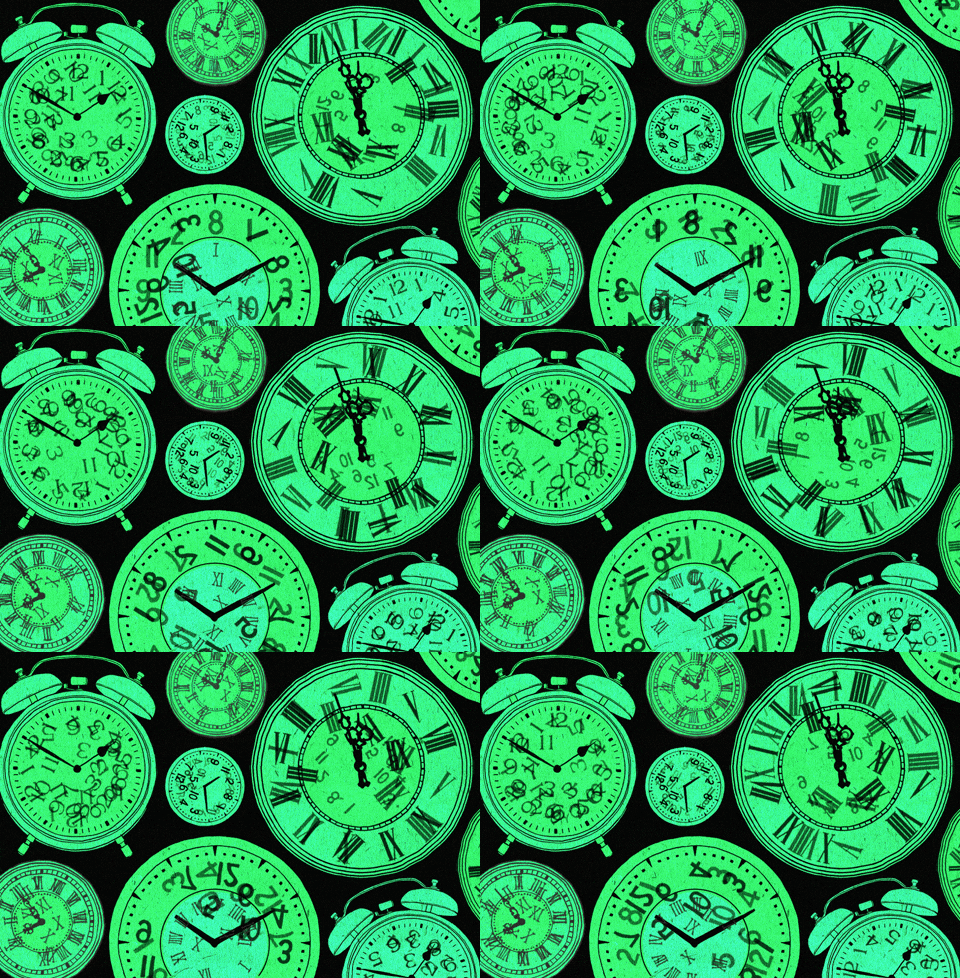
Giving someone a clock or timepiece, especially someone older, is seen as a snub because it can appear is if you are giving them a physical representation of the limited amount of time they have left in this life. At the same time, the Chinese phrase for ‘giving a clock’ (送钟 sòng zhōng /song jong/) sounds exactly like the one for ‘attending a funeral ritual’ (送终 sòng zhōng).
Pears

If you’re looking to give a fruit basket – make sure the basket hasn’t got any pears in it! As with most taboos, pears have a symbolic meaning for being left out of the gift list. As it turns out, the Chinese word for ‘pears’ (梨 / lí /lee) is very similar to the word for ‘parting’ or ‘leaving’, thus signifying that you are handing over a parting gift.
Shoes

Similarly, the word for ‘Shoes’ (鞋 xié /syeah/) sounds exactly like the word for bad luck or ‘evil’ (邪 xié). In this way, by giving someone a pair of shoes, you are giving them bad luck. The most common understanding for why not to give someone a pair of shoes, however, is in the more romantic sense. It is believed that if you give your lover a pair of shoes, you are giving them the means to run away from you.
Mirrors
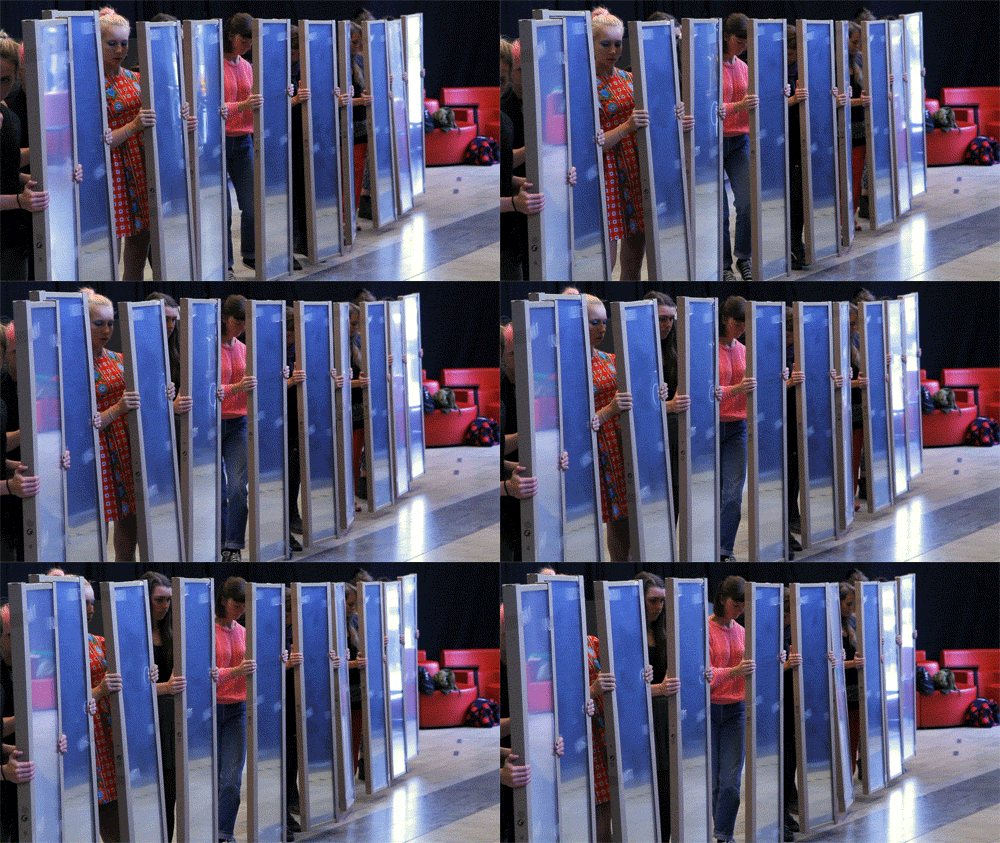
Mirrors are said to be a reflection of the soul and as such, because mirrors are easily broken, you do not want to give them as a gift ( on the off chance that the mirror breaks and breaks a part of their soul). Others believe that mirrors attract malicious ghosts and it is a bad omen to see something that shouldn’t be there in its reflection.
Anything that comes in fours

Another common Asian taboo is related to the number four. In both Chinese and Japanese, the words for the number four also carry the meaning of “death”. Therefore in gift-giving, you’d want to avoid giving anything in sets or multiples of four (unless it’s eight, as that is seen as an auspicious number). In the Japanese culture, this extends to the number nine as well, as it too means death.
Sharp objects
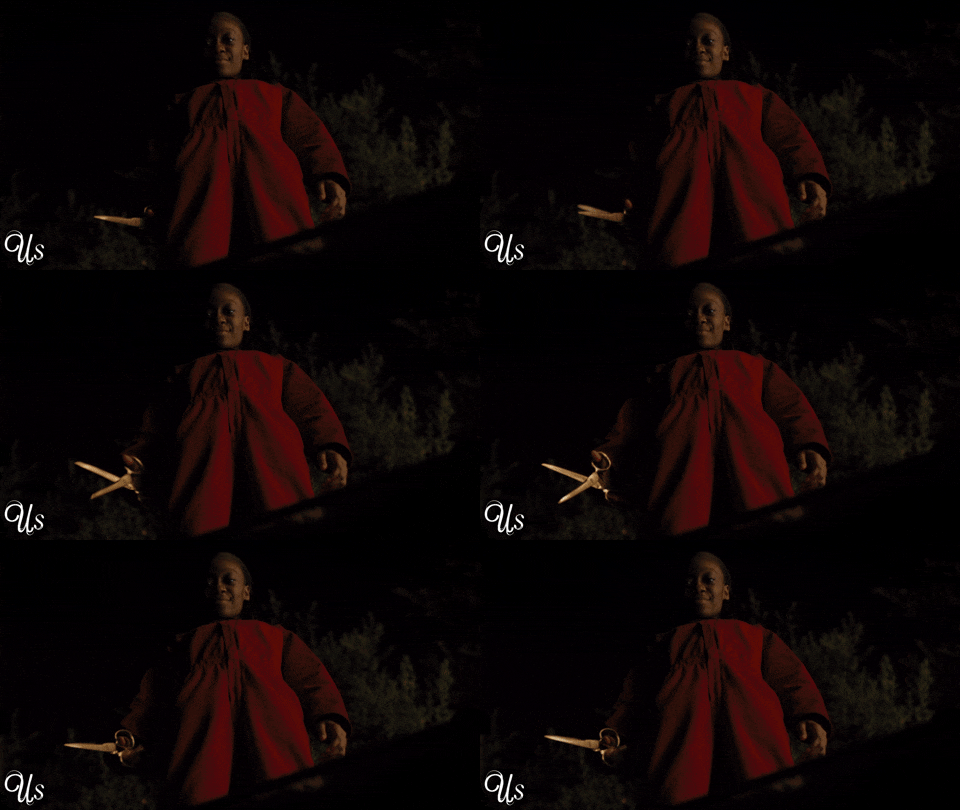
No, it’s not so much because of the physical risks of giving something sharp as a gift. A common Chinese saying is “一刀两断” (yì dāo liǎng duàn) which roughly translates to “one slash and it’s in two parts”. This then correlates the gifting of sharp objects (including scissors, penknives, kitchen knives and the like) with the wish to end a relationship with the person on the receiving end.
Umbrellas
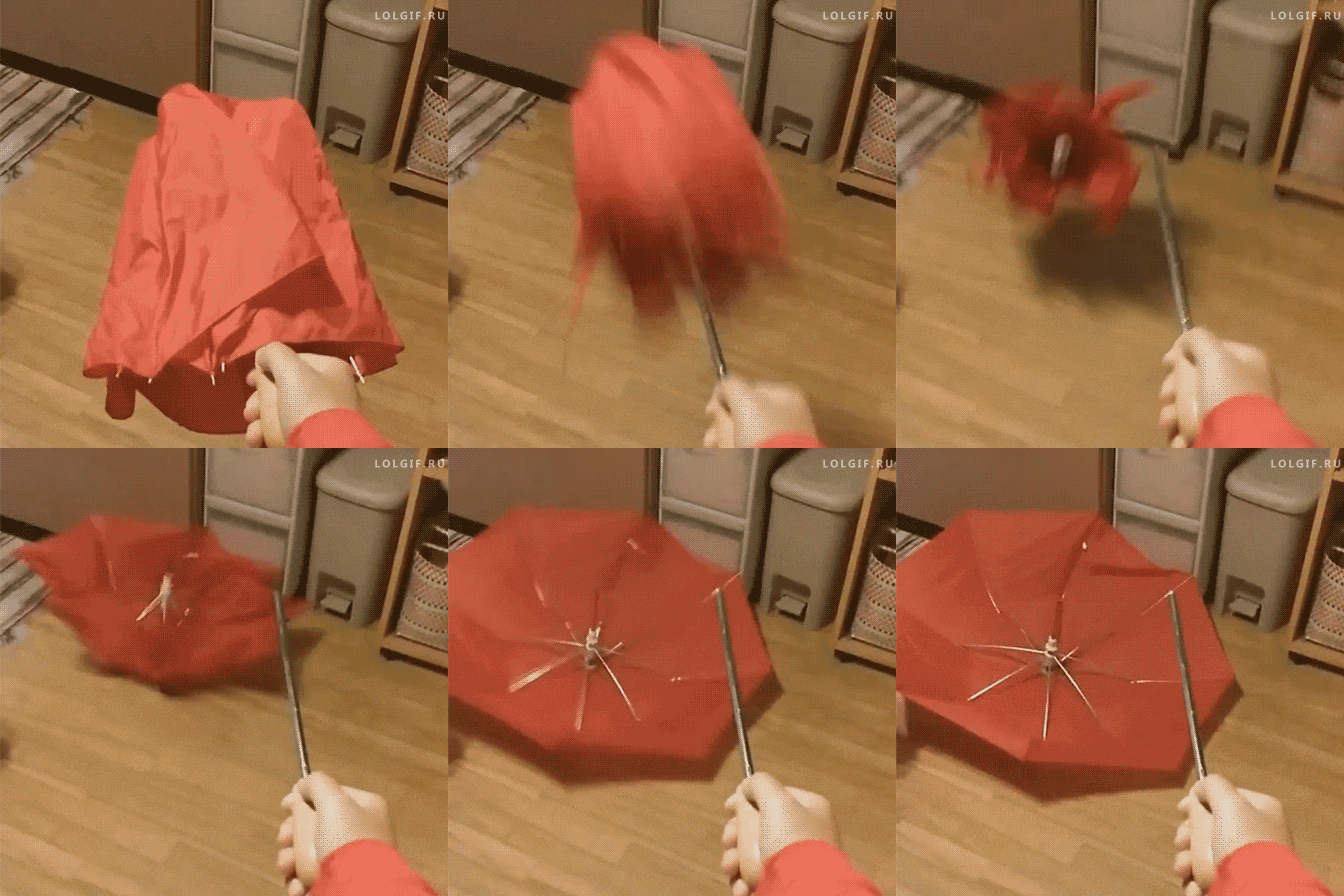
If you want to give an umbrella as a gift for CNY – why, idk, we’re not here to judge – hold up. Umbrellas in Chinese (伞 sǎn /san) sound like the word for ‘breaking up’ (散 sàn). This then means that in giving someone an umbrella, you want to end your relationship with them. However, this doesn’t really apply with platonic relationships so it is okay to put down the “My friend went to ___ and all he got me was this lousy t-shirt” shirt and get that cute cat-eared umbrella instead.
Handkerchief

When you’re at a funeral, sobbing alone in your room or needing to wipe up after your really good cry, it’s only natural you reach over for a tissue or something else to dry your face. It is a common belief that handkerchiefs are only mainly used during sad moments – at funerals or during/after a breakup – to soak up tears.
Anything black or white

While it is always recommended that you wrap your gifts, it is important to avoid using black or white (and sometimes blue) wrapping paper as these colours are associated with mourning. Of course, with Chinese New Year gifts, there is less of a chance that you will be using such colours (what with CNY being a celebration associated with the colours red and gold) but it’s good information to keep in mind! The importance of colour also extends to gifts, but particularly so when the gift in question is flowers. White flowers are typically also used when mourning.

But, don’t worry! Thankfully with the internet and a lot of locally source brands – there are tonnes of options for you to pick up a gift (approved by aunties, uncles, grandmas, grandpas, cousins, cousin sisters, cousin brothers…..) in time for CNY! At the end of the day, you are giving a gift to someone you care about – so demonstrate that through finding out what the person likes and dislikes!
*Cover image credits: Photo by Sharon McCutcheon on Unsplash


Post comments (0)