


The devastating news of the loss of all 53 crew members of the Indonesian Navy submarine KRI Nanggala (402) was preceded by the info that the submarine was found in pieces on the sea floor at a depth of 838 metres, where the water pressure proves to be deadly.
View this post on Instagram
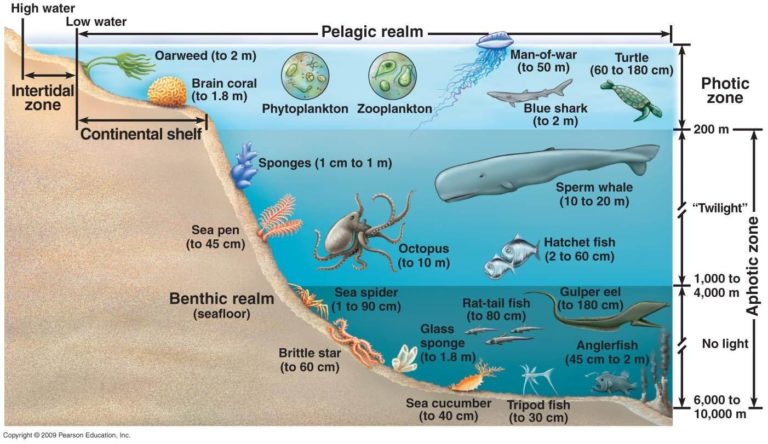
Ocean pressure changes with depth. At sea level, the air that surrounds us presses down on our bodies at the force of 6.67kg per square inch. However, we don’t feel it because the fluids in our bodies are also pushing outward with the same force. This is why only selected creatures inhabit the belly of the Earth at that depth – because they were physically built to withstand that kind of pressure. The ocean water column is separated into 5 different zones, such as the sunlight zone, the twilight zone, the midnight zone, the abyss and the trenches.
Sunlight Zone
The sunlight zone goes down to about 200 metres, where most of the light and heat are still present. This helps microscopic organisms convert the Sun’s energy through photosynthesis. Any deeper than this, the Sun’s light will no longer be able to penetrate and only a few organisms can survive.
Twilight Zone
The twilight zone is only able to receive faint traces of light. Larger fish like whales and giant squid dive to these depths to feed, and here is where we get to see beautiful, surreal-looking fish and other gelatinous animals.
The Midnight Zone
The Midnight Zone is a region that exists in depths below 1,000 metres where sunlight is not able to penetrate, causing it to be shrouded in total darkness. The water is frigid due to the lack of heat to be absorbed from the light. This part of the ocean is home to predators or scavengers, with the absence of plants or phytoplankton who need light to survive.
The Abyss
The Abyss goes down to about 4,000 metres and 6,000 metres. The water temperature is near freezing and only very few sea creatures are able to survive at these crushing depths. These creatures are invertebrates, like basket starfish and tiny squid. The Abyss also encompasses seventy-five per cent of the ocean floor.
The Trenches
This zone goes down to the deepest part of the ocean, where the temperature is near freezing and the crushing pressure is an astounding 8 tons per square inch. Despite these conditions, life can still be found such as pearlfish, snailfish and eelpouts.
Keep in mind that 80 per cent of the ocean remains undiscovered, so there are probably hundreds of sea creatures swimming and flopping about that we never even imagined could exist.
Our thoughts and prayers go out to the families of the victims of this tragedy.
May they be given the strength to march on in place of their brave soldiers.
*Cover image via Constantine Alexander

 After 11 Years, Lee Kwang Soo Is Leaving ‘Running Man’
Post comments (0)